Sponsored in part by Capital Farm Credit
WEDNESDAY | General Membership Meeting
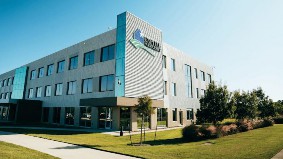
for the Texas Chapter | 12 – 1 PM | Capital Farm Credit Building |
Texas Rural Land Value Trends
Seminar (a review of 2025) | 1 – 5 PM | Capital Farm Credit Building | |
Texas Chapter Board of Directors Meeting with ASFMRA National Reps | 3 – 5 PM | Capital Farm Credit
Building | |
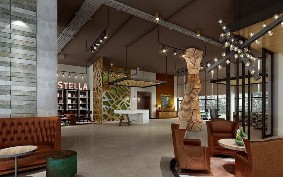
YPN Social Event | 5:30 – 7 PM | The Stella Hotel | |
Chapter Dinner | 7 PM | The Stella Hotel | |
THURSDAY | USPAP | 9 AM – 12 PM | CFC Building |
Lunch | Noon | CFC Building | |
USPAP | 1 PM – 5 PM | CFC Building | |
Dinner | On your own | ||
FRIDAY | Valuation Bias | 8 AM – 12 PM | CFC Building |
Lunch | Noon | CFC Building | |
Valuation Bias | 1 PM – 4 PM | CFC Building | |
Valuation Bias Exam (for Trainees) | 4 PM – 5 PM | CFC Building |
Member | Non-Member | |
|---|---|---|
Texas Rural Land Value Trends Seminar | $50 | $50 |
USPAP (includes lunch) | $200 | $250 |
Valuation Bias (includes lunch) | $200 | $250 |
YPN Social | $20 | $20 |
YPN Social (student) | $0 | $0 |
Chapter Dinner | $30 | $30 |
This event is designed to introduce Texas A&M University students to the ASFMRA and the Texas Chapter. We will extend invitations to the different undergrad and graduate departments. Students, please register online if you plan to attend so we have a headcount. It is FREE for students.
Led by Dr. Lynn Krebs from the Real Estate Center, this seminar sets the stage for the Land Trends magazine presented at the Outlook for Rural Land Values Conference. All members that participate will be highlighted in the magazine. Non-members are welcome to attend to receive the ACE hours. For clarification, in 2026 we gather the sales data from 2025 to prepare the 2025 Land Trends magazine. It is a review of 2025 with projections for 2026.
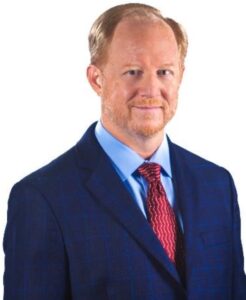
Dr. Lynn Krebs, Research Economist
Lynn joined the Texas Real Estate Research Center staff in 2022 with an extensive background in commercial real estate and property tax consulting. He began his career at the Center as a graduate assistant in 1992, where he assisted Dr. Charles Gilliland in rural land markets and property tax research and reporting.
He earned his bachelor’s degree in agricultural economics and Master’s in land economics and real estate, both from Texas A&M University in College Station. Lynn also earned a Ph.D. from Georgia State University while working for the Institute of Professionals in Taxation in Atlanta from 1994 to 2003. From there, Lynn returned to the great state of Texas to join Collegiate Development as Senior Vice President in Dallas. Subsequently, Lynn worked in property tax consulting from 2007 to 2022. He most recently served as CEO of Tax Advisors Group where he led the firm for eight years through tremendous growth from its original founder through two rounds of successful private equity investments.
Contact Hours: 7 classroom hours
This is the 2026-2027 7-Hour National USPAP Continuing Education Course, developed by the Appraisal Foundation (the Foundation). The course is roughly divided into two sections. The first focuses on lessons that will put USPAP nuances into focus; the second presents case studies that show how USPAP applies in situations that appraisers may encounter.
This course is designed to assist appraisers in all areas of appraisal practice seeking USPAP competency, including those how are subject to states licensing or certification and continuing education requirements of professional organizations, client groups or employers.
In addition to the student manual, each student must have two additional publications in this course: the 2024 USPAP and the 2026 USPAP Guidance and Reference Manual.
Contact Hours: 7 hours + 1 hour exam
This comprehensive 7-hour course provides an in-depth exploration of valuation bias in the real estate sector, focusing on its impact within the context of fair housing laws and regulations. Participants will delve into historical and contemporary aspects of real estate bias to gain an understanding of the roles and influences of various stakeholders including real estate agents, appraisers, lenders, and government bodies. The course will cover key federal fair housing and antidiscrimination laws, such as the Civil Rights Act of 1866, Fair Housing Act, and others, emphasizing their relevance in today’s real estate practices. Through a blend of theoretical knowledge and practical case studies, attendees will gain insights into different forms of valuation bias, including explicit, implicit, and structural biases, and learn strategies for recognizing and avoiding such biases in their professional practice. This course is intended to satisfy the Appraiser Qualifications Board’s (AQB) continuing education requirement for valuation bias and fair housing laws and regulations education as adopted on June 22, 2023 for the 2026 edition of the Real Property Appraiser Qualification Criteria (RPAQC).
Region One – Panhandle and South Plains
North Panhandle: Carson, Dallam, Gray, Hanford, Hartley, Hemphill, Hutchinson, Lipscomb, Moore, Ochiltree, Oldham, Potter, Roberts, and Sherman
North Portion of the South Plains: Armstrong, Bailey, Briscoe, Castro, Cochran, Crosby, Deaf Smith, Floyd, Hale, Hockley, Lamb, Lubbock, Parmer, Randall, and Swisher
South Portion of the South Plains: Andrews, Borden, Dawson, Ector, Gaines, Garza, Howard, Lynn, Martin, Midland, Terry, and Yoakum
Region Two – Far West Texas, Trans-Pecos, and Big Bend
Far West Texas: Culberson, El Paso and Hudspeth
Big Bend: Brewster, Jeff Davis, and Presidio
Trans-Pecos: Loving, Pecos, Reeves, Terrell, Ward, and Winkler
Region Three – North, Central and South Central Texas
North Texas: Archer, Baylor, Clay, Collingsworth, Cottle, Dickens, Donley, Foard, Hall, Hardeman, Jack, King, Knox, Motley, Throckmorton, Wheeler, Wichita, Wilbarger, and Young
Central Texas: Coke, Concho, Fisher, Haskell, Jones, Kent, Mitchell, Nolan, Runnels, Scurry, Shackelford, Stephens, Stonewall, Taylor, and Tom Green
South Central Texas: Crane, Crockett, Edwards Glasscock, Irion, Kinney, Reagan, Schleicher, Sterling, Sutton, Upton, and Val Verde
Region Four – North Texas, Northeast Texas, and Piney Woods
North Texas: Cooke, Ellis, Fannin, Grayson, Hunt, Kaufman, Montague, Palo Pinto, Rains, Somervell, and Van Zandt
Northeast Texas: Bowie, Camp, Cass, Delta, Hopkins, Lamar, Marion, Morris, Red River, Titus, Upshur, and Wood
North Piney Woods: Anderson, Cherokee, Gregg, Harrison, Henderson, Houston, Nacogdoches, Panola, Rusk, Shelby, and Smith
South Piney Woods: Angelina, Jasper, Newton, Polk, Sabine, San Augustine, Trinity, and Tyler
Region Five – Southern Piney Woods, Coastal Prairies, and Brazos Bottom
East Coastal Prairie and Southeast Piney Woods: Chambers, Hardin, Jefferson, Liberty, and Orange
Southwest Piney Woods: San Jacinto and Walker
Brazos Bottom: Brazos, Burleson, Grimes, Leon, Madison, and Robertson
Houston Area: Brazoria, Fort Bend, Galveston, Harris, Montgomery, and Waller
Central Portion of the Coastal Prairie: Calhoun Jackson, Matagorda, Victoria, and Wharton
North Portion of the Coastal Prairie: Colorado, DeWitt, Fayette, Gonzales, and Lavaca
Bellville and Brenham Area: Austin and Washington
Region Six – Hill Country, South Texas, Coastal Bend and Rio Grande Valley
Transition Zone between Texas Hill Country and Upper Brush Country: Atascosa, Bexar, Comal, Guadalupe, Medina, Uvalde, and Wilson
Upper South Texas (Upper to Mid Brush Country): Atascosa, Dimmit, Frio, La Salle, Live Oak,
Maverick, McMullen, Webb, Wilson, and Zavala
Lower South Texas (Lower Brush Country): Brooks, Duval, Jim Hogg, Jim Wells, Starr, and Zapata
Coastal Plains: Aransas, Bee, Goliad, Karnes, and Refugio
Coastal Bend: Kleberg, Kenedy, Nueces and San Patricio
Rio Grande Valley: Cameron, Hidalgo, and Willacy
Region Seven – Grand Prairie, Central Basin, Blacklands, Post Oak Belts, Edwards Plateau and Hill Country
South Grand Prairie: Brown, Callahan, Coleman, Comanche, Eastland, and Erath
Central Basin: Hamilton, Lampasas, Llano, McCulloch, Mills and San Saba
Central Blacklands, Grand Prairie and Post Oaks within a 50-Mile Radius of Waco: Bell, Bosque, Coryell, Falls, Freestone, Hill, Limestone, McLennan, and Navarro
East Edwards Plateau, Central Blackland and South Post Oaks (Austin Area): Bastrop, Blanco,
Burnet, Caldwell, Hays, Lee, Milam, Travis, and Williamson
East Hill Country: Bandera, Gillespie, Kendall, Kerr and Real
West Hill Country: Kimble, Mason, and Menard

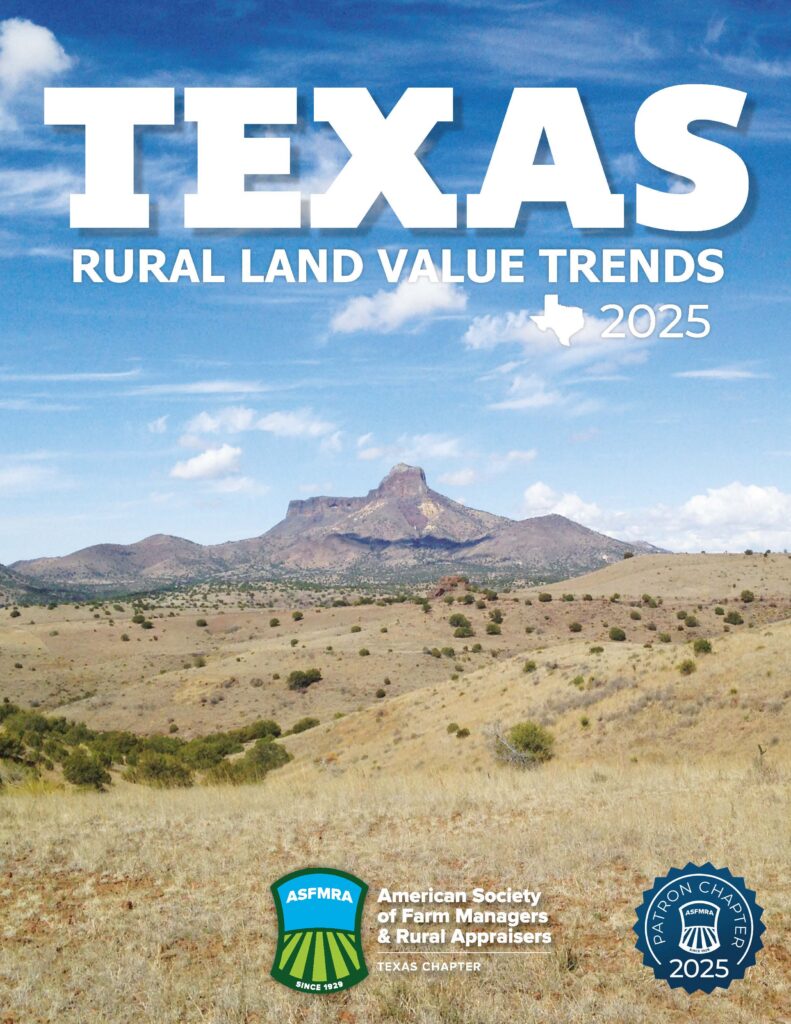
Presented at the 34th Annual Outlook for Texas Land Markets on April 10-11, 2025.
The Texas Rural Land Value Trends for 2024 is an analysis of all the trends and transactions that occurred during the 2024 calendar year, with projections for 2025.
"*" indicates required fields

Presented at the 33rd Annual Outlook for Texas Land Markets on April 4, 2024.
The Texas Rural Land Value Trends for 2023 is an analysis of all the trends and transactions that occurred during the 2023 calendar year, with projections for 2024.
"*" indicates required fields

Presented at the 32nd Annual Outlook for Texas Land Markets on April 13, 2023
"*" indicates required fields

Presented at the 31st Annual Outlook for Texas Land Markets on April 28, 2022
"*" indicates required fields

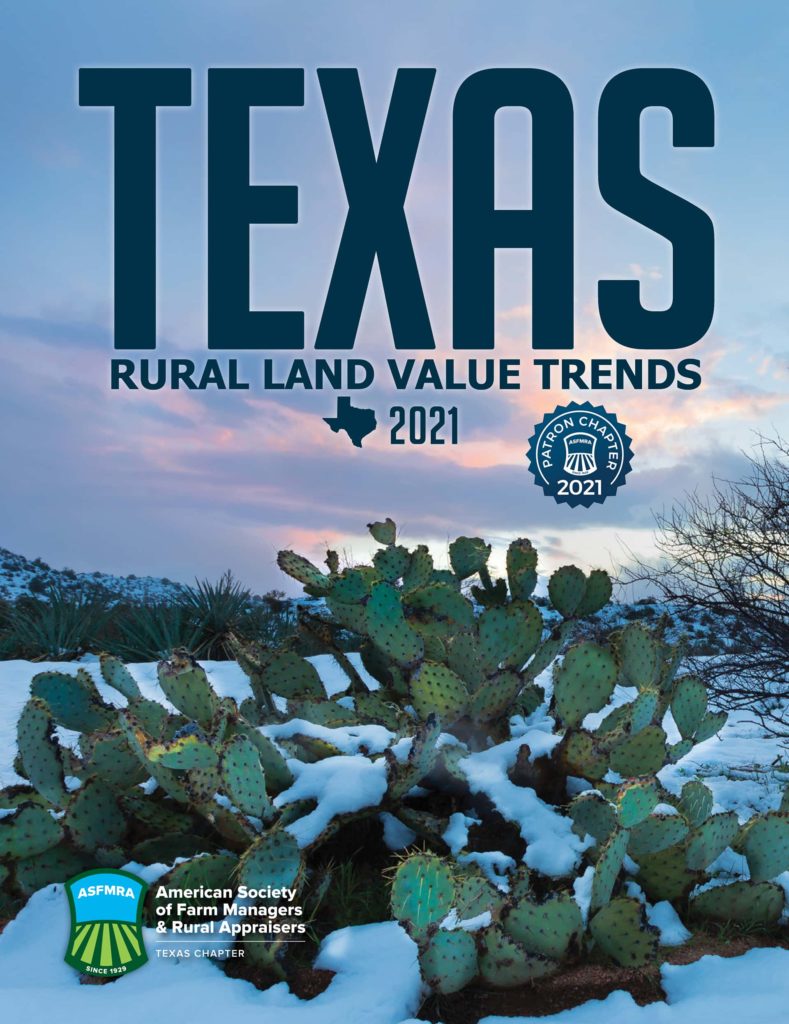
Presented at the 30th Annual Outlook for Texas Land Markets on April 22, 2021
"*" indicates required fields

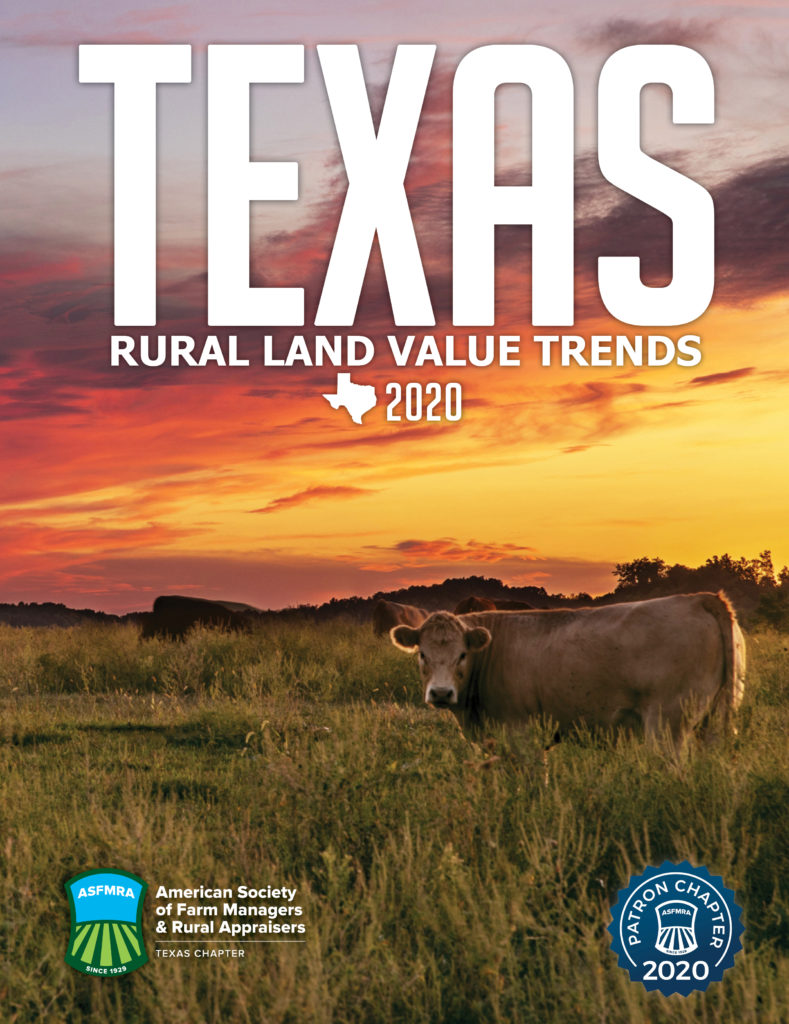
Created and published by the Texas Chapter ASFMRA (Outlook Conference for 2020 was cancelled due to COVID-19)
"*" indicates required fields

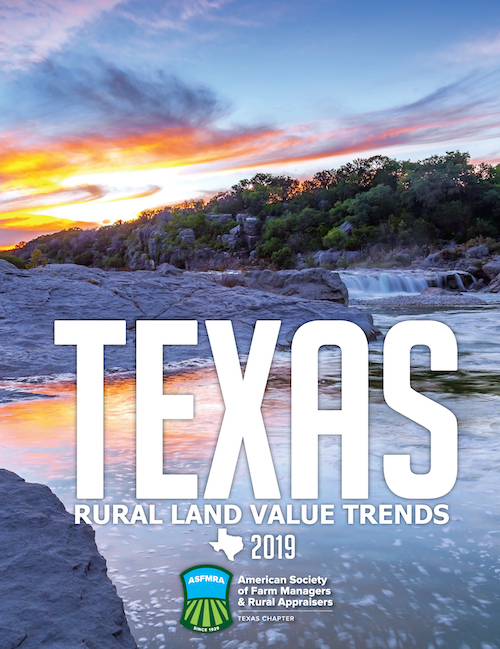
Presented at the 29th Annual Outlook for Texas Land Markets on April 25, 2019
"*" indicates required fields

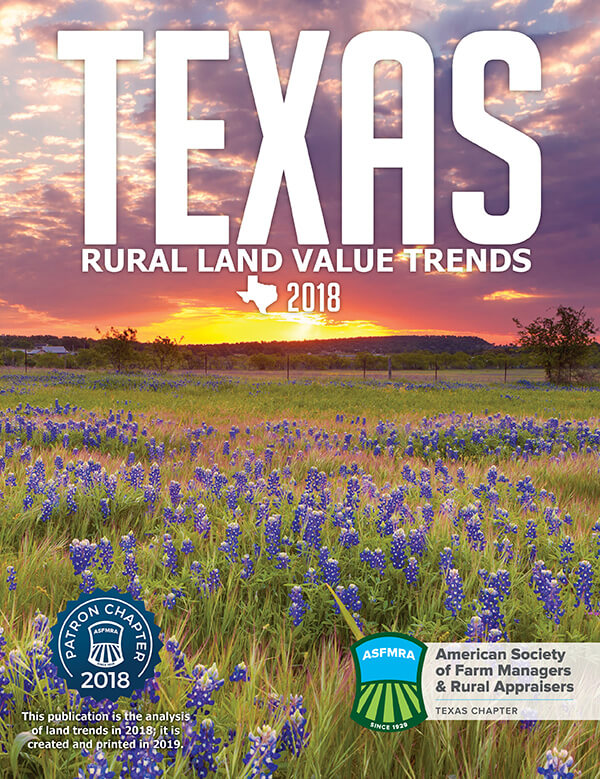
Presented at the 28th Annual Outlook for Texas Land Markets on April 26, 2018
"*" indicates required fields

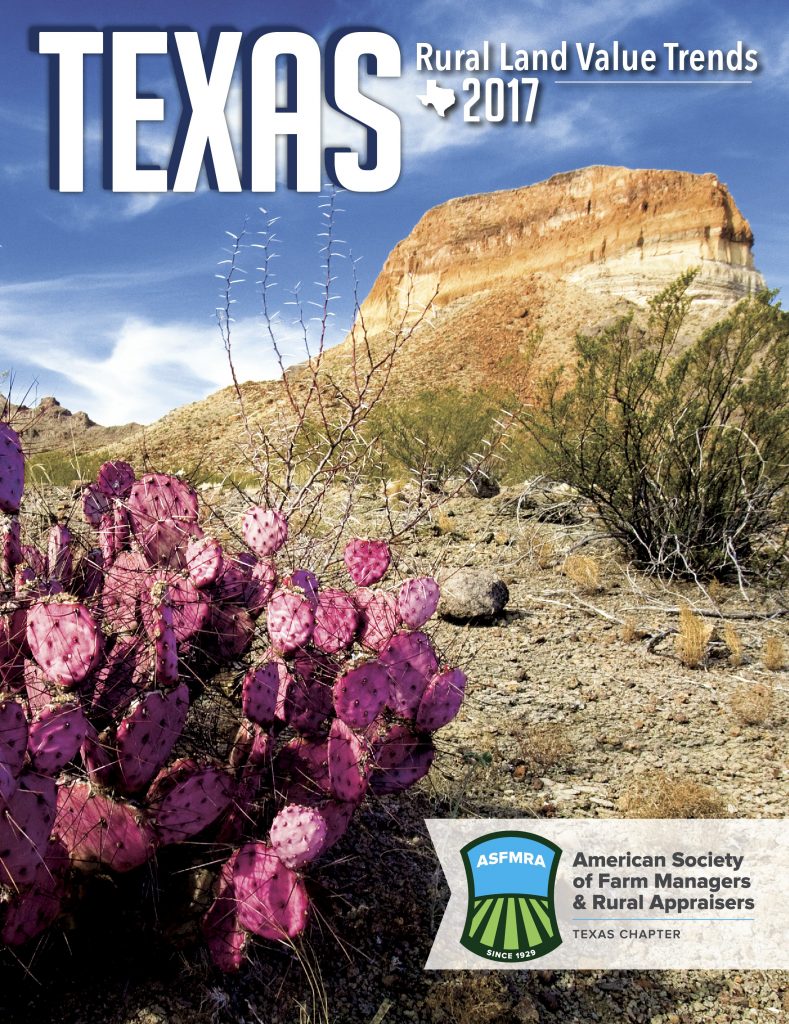
Presented at the 27th Annual Outlook for Texas Land Markets on April 20, 2017
"*" indicates required fields